
16Mo3 H-type Finned Tubes Successfully Delivered
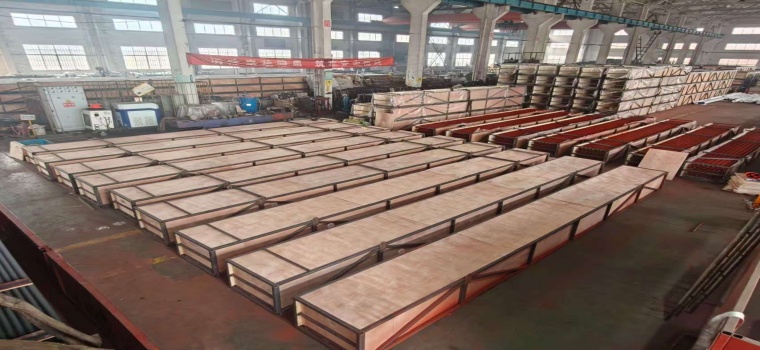
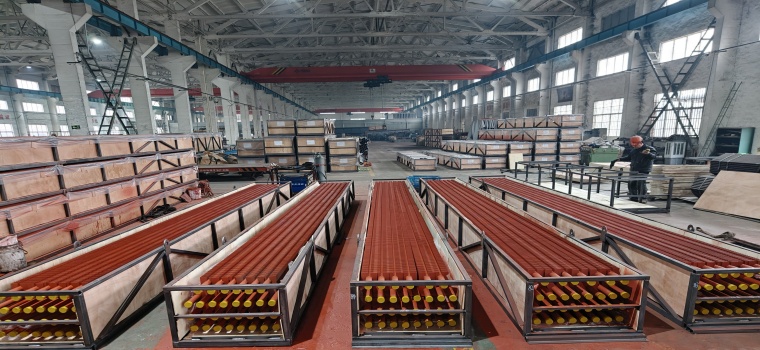
On August 13, 2026, our company successfully delivered a batch of EN 10216-2 TC2 16Mo3 H-type finned tubes.
On June 11, 2026, Beite Steel Pipe Company received an order from a power plant. The customer urgently needed this batch of EN 10216-2 TC2 16Mo3 H-type finned tubes and hoped that our company could complete the production and third-party testing of the EN 10216-2 TC2 16Mo3 H-type finned tubes within 60 days.
Order Details:
Product:H Finned Tube
Tube(Material):16Mo3
Fin Material:DD14
Tube O/D:51MM
Wall Thickness:5.6MM
Length:8000MM
Fin O/D:120.65MM
Fin Width:51.6MM
Fin Thickness:3MM
FINS Pitch:20MM
Bare End:100MM
Qty:4700Pcs
Challenges:
1. Urgent timeframe and short delivery period
2. Requires coordination among multiple departments (steel pipe production workshop, steel plate (fin) production workshop, finned tube production workshop, quality inspection department, third-party testing).
Ultimately, through the active cooperation of all departments, our company successfully completed the production and testing of 4700 EN 10216-2 TC2 16Mo3 H-type finned tubes within the stipulated time and delivered the goods smoothly.
Shipping photos of 16Mo3 H-type Finned Tubes
Introduction to The H-Finned Tube
The H-Finned Tube is a high-efficiency heat exchange element. Its unique "H"-shaped structure significantly enhances heat transfer, making it particularly suitable for industrial flue gas environments with high ash content and high abrasion, such as economizers in power plant boilers and marine heat exchangers.
Structure and Working Principle:
The core design of the H-Finned Tube involves symmetrically welding two rectangular steel plates to both sides of the base tube, forming a stable "H"-shaped structure with a narrow slit in the middle.
Heat Transfer Mechanism: The fins significantly increase the heat exchange area outside the tube, resulting in heat transfer efficiency far exceeding that of ordinary bare tubes. Furthermore, the welds are strong, resulting in extremely low contact thermal resistance.
Fluid Dynamics:
The central slit allows flue gas to pass smoothly, preventing particulate matter from forming vortex zones behind the tube, thus reducing wear and ash accumulation.
Structural Forms:
Available in single-H and double-H types. The double-H type offers better rigidity and is suitable for applications with longer tube banks. Core Advantages and Application Scenarios
Compared to spiral finned tubes, H-finned Tubes perform better in harsh conditions, primarily due to their superior wear resistance and self-cleaning properties.
Wear Resistance and Dust Prevention: The straight channels maintain airflow direction, making it difficult for dust particles to adhere, resulting in a wear life 3-4 times longer than spiral finned tubes.
The fin spacing guides airflow to sweep away accumulated dust, making it particularly suitable for flue gas environments with high dust concentrations.
Typical Application Areas:
Power Plants and Industrial Boilers:
Widely used in economizers, air preheaters, and waste heat boiler tail-end heat exchange systems, especially in coal-fired and biomass boilers.
Marine and Marine Engineering:
For high salt spray environments, it is recommended to use stainless steel (such as 304/316L) and design a reasonable fin spacing (10-15mm) to prevent corrosion.
Chemical and Metallurgical Applications:
Used in air preheaters for heating furnaces and various gas-to-gas and gas-to-liquid heat exchange equipment.
![field:title/]](/uploads/260813/1-260Q31F6104E.jpg)
![field:title/]](/uploads/260416/1-260416113223154.jpg)
![field:title/]](/uploads/250530/1-2505301039151F.jpg)
![field:title/]](/uploads/250402/1-250402152535153.jpg)
![field:title/]](/uploads/241107/1-24110G95J1A3.jpg)
![field:title/]](/uploads/241012/1-2410121R15E03.jpg)
![field:title/]](/uploads/231228/1-23122QF403122.jpg)
![field:title/]](/uploads/230720/1-230H0195JJ02.jpg)